



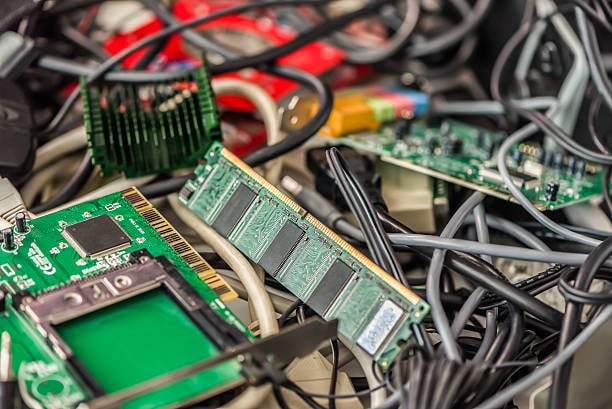
Electronic equipment contains materials that can be recovered and used again, but those materials are only valuable when facilities handle them correctly. Computers, monitors, printers, servers, phones, and networking devices may contain metals, plastics, glass, batteries, and components that require different processing methods.
The volume of material moving through recycling systems shows why organized collection and processing matter. The New Jersey Department of Environmental Protection reported that its statewide program collected 53.2 million pounds of covered electronic devices in 2024, demonstrating the scale of electronics collection that dedicated systems can support. The New Jersey DEP’s annual collection figures provide a useful example of how a state program tracks collected electronics.
For businesses, a professional facility can help turn an otherwise difficult disposal task into a managed process. Depending on the equipment and service arrangement, that process may include:
- Coordinated pickup or scheduled drop-off.
- Inventory recording and equipment identification.
- Secure handling of devices that may contain business data.
- Testing to determine whether equipment can be reused.
- Dismantling and separation of recyclable materials.
- Responsible management of components that need specialized treatment.
- Processing records and final disposition reporting.
Knowing what happens at each stage helps office managers and business owners prepare equipment properly and set realistic expectations before collection begins.
1. Initial Consultation and Collection Planning
A professional recycling process usually begins before equipment leaves your office. The facility or recycling service team needs to understand what you are disposing of, where the equipment is located, how much material is involved, and whether any items require special handling.
Equipment and Volume Review
Businesses may have a mixture of desktop computers, laptops, monitors, printers, cables, servers, phones, and other electronic assets. Providing an approximate inventory helps the recycling team determine collection requirements and suitable handling arrangements.
Useful details include:
- Equipment types and approximate quantities.
- Number of collection locations.
- Whether equipment is stored on desks, in storage rooms, or in server areas.
- Presence of batteries, damaged devices, or bulky equipment.
- Whether any devices contain confidential or regulated information.
Pickup or Drop-Off Arrangements
Depending on the facility’s service model, businesses may arrange a scheduled pickup or transport equipment to a designated drop-off location. Larger collections may require coordinated access, loading arrangements, packing materials, and a clear collection schedule.
Before confirming the arrangement, clarify who handles packing, lifting, transportation, and documentation. This helps prevent delays and reduces the chance of equipment being left behind or incorrectly categorized.
2. Equipment Check-In and Inventory Recording
When electronics arrive at a recycling facility, the next step is to identify and record the incoming equipment. This check-in process helps the facility track materials as they move through assessment, reuse, dismantling, and recycling.
For business collections, accurate records are especially important because equipment may come from different departments, offices, or locations.
A facility may record:
- Equipment category and description.
- Quantity and condition.
- Manufacturer, model, or serial number where relevant.
- Asset tags or identifying labels.
- Collection reference or transfer documentation.
- Any special handling instructions supplied by the business.
This information creates a starting record for the processing journey. It can also help businesses reconcile their asset inventories and confirm which equipment entered the recycling process.
Organizations disposing of larger volumes should ask what inventory information the facility can provide and whether the final report can be matched to their internal asset records.
3. Sorting and Categorizing Electronic Equipment
After check-in, facilities sort electronics according to their type, condition, material composition, and processing requirements. Sorting is important because different products cannot all follow the same recycling route.
For example, a working laptop may be suitable for refurbishment, while a damaged printer may require dismantling. A monitor may contain components that need specialized handling, and a battery should not be mixed indiscriminately with general electronic materials.
Common sorting categories include:
Computers and IT Equipment
Desktops, laptops, servers, networking devices, and related accessories may undergo testing to determine whether they can be reused, repaired, or dismantled.
Displays and Monitors
Monitors and other display equipment may require separate processing based on their technology and component materials. Older display types can require additional care because of the materials they contain.
Printers and Office Electronics
Printers, scanners, copiers, and other office equipment contain a mixture of electronic components, metals, plastics, and sometimes consumables that need appropriate separation.
Cables and Accessories
Cables, chargers, connectors, keyboards, and similar accessories may be sorted into suitable material streams for recovery.
A professional ewaste recycling center should have a clear process for identifying different equipment categories and directing them to appropriate handling routes.
4. Data Security and Handling of Information-Bearing Devices
Business electronics often contain information that should not leave an organization without appropriate protection. Computers, servers, mobile devices, storage drives, and multifunction printers may retain customer details, employee records, financial information, business documents, or network credentials.
Deleting files or removing a device from an office network does not necessarily eliminate stored information. Businesses should establish their data security requirements before equipment enters the collection process.
Identify Devices That Store Data
Prepare a list of equipment that may contain storage media. This can include internal hard drives, solid-state drives, removable storage, and other data-bearing components.
Select the Appropriate Sanitization or Destruction Method
Depending on the device and its intended destination, data may be removed through approved sanitization procedures or storage media may require physical destruction. The method should reflect the sensitivity of the information and the organization’s security policy.
Request Processing Documentation
Businesses should clarify what records they will receive after data sanitization or destruction. These may include asset identifiers, processing dates, methods used, and certificates confirming completed work.
At E-XPIRE, we view secure handling as an important part of responsible electronics disposition. Recycling should account for the information stored on business devices as carefully as it accounts for their physical materials.
5. Testing, Refurbishment, and Reuse Assessment
Not every electronic device that reaches a recycling facility needs to be dismantled. Some equipment may still function or require only minor repairs before it can serve another user.
A professional facility may assess incoming equipment to determine whether it can be:
- Reused: Functional equipment may be suitable for another application or user.
- Refurbished: Devices may undergo repairs, component replacement, cleaning, or software preparation.
- Remarketed: Equipment with remaining commercial value may be prepared for resale after appropriate data sanitization.
- Dismantled: Devices that cannot be reused may be separated into individual components for material recovery.
This assessment supports a more resource-conscious approach to disposal. Extending the useful life of suitable equipment can reduce unnecessary waste and preserve the value of products that still have a practical purpose.
The Recycled Materials Association (ReMA) estimated that approximately 5.9 million metric tons of used electrical and electronic equipment were recovered for recycling and reuse in the United States in 2024. Its 2025 Yearbook electronics industry data highlights the importance of both recovery pathways in managing used electronics.
6. Dismantling and Material Recovery
Equipment that cannot be reused or refurbished may move into dismantling and material recovery. At this stage, trained personnel separate components and materials so they can enter suitable recycling streams.
The process varies according to equipment type, design, and condition. A desktop computer, for example, contains different materials from a printer or flat-screen monitor.
Commonly recovered materials include:
- Ferrous metals: Steel and iron from equipment housings and structural components.
- Nonferrous metals: Aluminum and copper from casings, wiring, and electronic components.
- Precious metals: Small quantities of gold, silver, and other valuable metals may be present in circuit boards and connectors.
- Plastics: Certain plastic components can be separated for suitable recycling processes.
- Glass: Some display and electronic components contain glass that requires appropriate processing.
Specialized Component Handling
Certain parts need additional attention before they can enter recovery streams. Batteries, lamps, display components, and other materials may require separate handling based on their composition and applicable requirements.
A professional facility should have procedures for identifying these components, separating them from general equipment, and directing them to appropriate downstream processors.
This is an important part of responsible tech waste recycling because incorrect handling can create safety and environmental risks while reducing the amount of material that can be recovered.
7. Downstream Processing and Responsible Waste Management
A recycling facility may handle initial sorting and dismantling internally while relying on specialized downstream partners for particular materials. These partners may process metals, plastics, batteries, circuit boards, or other components using equipment designed for specific recovery requirements.
Businesses should understand this part of the process because the recycling journey may continue beyond the first facility.
When assessing a recycling operation, ask:
- Which materials are processed at the facility?
- Are any components transferred to downstream processors?
- How does the facility evaluate and monitor those partners?
- How are non-recyclable or difficult-to-process materials managed?
- Can the facility provide records showing the final disposition of collected equipment?
These questions help organizations understand whether their electronics follow a controlled route after collection. They also make it easier to assess the quality of e-waste recycling services rather than relying only on the promise that equipment will be recycled.
8. Reporting and Final Documentation
The recycling process should conclude with appropriate records that show what happened to the collected equipment. Documentation is especially useful for businesses that need to reconcile asset inventories, maintain internal disposal records, or demonstrate responsible waste management practices.
Depending on the service and processing arrangement, a facility may provide:
- Collection receipts or transfer documentation.
- Equipment inventories and asset identification records.
- Data sanitization or destruction certificates.
- Reuse, refurbishment, or remarketing summaries.
- Recycling and material recovery reports.
- Final disposition records.
The information available will vary by facility and service. Businesses should confirm reporting requirements before scheduling a collection, particularly when they need serial-number-level tracking or formal data destruction documentation.
Keeping these records together also helps office managers and sustainability teams review disposal activity over time and identify opportunities to improve future asset management.
How to Prepare Your Business Electronics for Collection
Businesses can make the recycling process more efficient by preparing equipment before pickup or drop-off. A little organization helps the facility identify incoming assets, plan handling requirements, and reduce avoidable collection delays.
Use these steps to prepare:
- Create an equipment list: Record the types and approximate quantities of devices being retired.
- Separate data-bearing equipment: Identify computers, servers, phones, storage drives, and other devices that may contain sensitive information.
- Follow internal data procedures: Back up required files and arrange approved data sanitization or destruction before equipment leaves your control.
- Separate special items: Identify loose batteries, damaged devices, and equipment that may need additional handling.
- Organize the collection area: Group equipment by category and make sure the collection team can access it safely.
- Confirm collection details: Agree on the schedule, transportation arrangements, inventory requirements, and documentation you expect to receive.
Businesses with multiple offices should also establish consistent procedures so employees follow the same disposal process at each location.
How E-XPIRE Supports Business Electronics Recycling
At E-XPIRE, we help organizations manage retired electronics through services that address secure data destruction, equipment recovery, and responsible recycling. We understand that businesses may need to dispose of everything from individual office devices to larger volumes of IT equipment.
Our capabilities include electronics recycling, asset remarketing, asset redeployment, asset tag removal, secure data destruction, and logistics support. This allows us to consider the condition, data security requirements, and appropriate disposition route for different types of business equipment.
We focus on helping organizations manage the practical stages of electronics retirement, from collection and secure handling to recovery and final disposition. Our approach supports businesses that want a more structured process for managing their unwanted technology.
Make Your Next Electronics Disposal Process More Organized
A professional ewaste recycling center does more than accept unwanted devices. It manages a sequence of activities that may include collection planning, inventory recording, sorting, data security, equipment assessment, dismantling, material recovery, and final reporting.
Understanding these stages helps businesses prepare equipment correctly, ask more useful questions, and make informed decisions about responsible disposal. It also helps office managers and organizations distinguish between a basic collection service and a more comprehensive electronics recycling process.
At E-XPIRE, we support businesses with electronics recycling and IT asset disposition services designed around secure handling and responsible equipment management. If your organization is planning an office cleanout, technology upgrade, or larger equipment retirement, contact E-XPIRE to discuss your electronics disposal requirements.
Frequently Asked Questions
1. What happens when electronics arrive at a professional e-waste recycling center?
The facility typically records incoming equipment, sorts devices by type and condition, and assesses whether they can be reused, refurbished, or dismantled. Data-bearing equipment may also undergo appropriate sanitization or destruction before further processing.
2. Can businesses recycle computers, printers, servers, and office equipment together?
Many facilities accept several categories of business electronics, including computers, printers, servers, monitors, and accessories. However, acceptance rules and handling requirements can vary, so businesses should confirm which items the facility can process before arranging collection.
3. Should businesses remove data before sending electronics for recycling?
Yes. Businesses should identify all devices that may contain sensitive information and follow an appropriate data sanitization or destruction process. They should also confirm whether the recycling service provides data destruction and supporting documentation.
4. What is the difference between electronics reuse and recycling?
Reuse involves extending a device’s useful life through continued use, redeployment, or resale. Recycling involves processing equipment or its components to recover materials for use in other products. Facilities may assess equipment for reuse before directing unsuitable items toward material recovery.
5. How can a business find a suitable local e-waste recycling center?
Businesses should assess the facility’s accepted equipment categories, collection arrangements, data security procedures, processing capabilities, downstream controls, and documentation. They should also verify relevant certifications where required and confirm that the facility can support their collection volume and operational needs.