



What Happens During the Electronics Recycling Process for Business IT Equipment?
Businesses regularly upgrade computers, servers, networking devices, storage systems, and other technology equipment to improve performance and efficiency. However, replacing outdated IT assets creates the responsibility of managing old equipment properly. A structured recycling process ensures that retired devices are handled securely while protecting sensitive business information.
A professional electronics recycling process involves much more than simply removing unwanted devices. It includes collection, inventory tracking, secure data destruction, equipment evaluation, material recovery, and compliance documentation. By following a controlled approach, businesses can reduce security risks, recover value from usable equipment, and support responsible e waste management.
Why Businesses Need a Structured Electronics Recycling Process
A well-defined electronics recycling workflow helps organizations manage retired technology assets efficiently. Without proper procedures, businesses may face data security concerns, compliance challenges, and difficulties tracking equipment after disposal.
The Importance of Secure IT Equipment Recycling
Business IT equipment often contains sensitive information stored on hard drives, solid-state drives, and other storage devices. Removing these assets without proper handling can create risks if data is not permanently erased or destroyed.
Secure IT equipment recycling focuses on protecting information throughout the entire recycling lifecycle. The process typically includes asset identification, controlled transportation, data sanitization, and documented processing. Professional recycling providers separate reusable equipment from items requiring material recovery while maintaining proper security procedures.
A secure approach helps businesses:
- Protect confidential information
- Maintain accurate asset records
- Reduce compliance risks
- Improve equipment recovery opportunities
- Ensure responsible electronic waste handling
Electronics recycling providers often use structured processes similar to IT asset disposition programs, where equipment is assessed, processed, and documented throughout its lifecycle.
How Responsible E Waste Management Protects Businesses
Responsible e waste management allows businesses to retire technology while minimizing environmental impact and maintaining operational control. Improper disposal methods can lead to unnecessary waste and increase risks related to sensitive equipment.
A reliable recycling process ensures that electronics are properly sorted, dismantled, refurbished, or recycled based on their condition. This approach supports sustainability goals while helping organizations maintain better control over retired assets.
Step-by-Step Electronics Recycling Workflow
The electronics recycling process follows several important stages to ensure equipment is handled securely and efficiently. Each step helps protect business information, recover valuable materials, and maintain proper documentation.
Asset Collection and Inventory Verification
The first stage of electronics recycling begins with collecting and identifying IT equipment. Before devices are transported, businesses and recycling providers verify the inventory to ensure every asset is accounted for.
Inventory verification usually includes:
| Information Collected | Purpose |
|---|---|
| Device type and model | Identifies equipment category |
| Serial numbers | Supports tracking and documentation |
| Asset tags | Confirms ownership records |
| Quantity of devices | Helps manage logistics |
| Equipment condition | Determines reuse or recycling options |
Accurate inventory records create transparency throughout the recycling process. They also help businesses understand which assets may have remaining value and which devices require complete recycling.
Secure Data Destruction and Equipment Evaluation
After collection, equipment containing storage media goes through secure data destruction procedures. Data removal is a critical step because deleting files manually does not guarantee that information cannot be recovered.
Professional recycling providers use approved data sanitization methods to permanently remove information from storage devices. E-XPIRE follows secure IT asset processing practices to help businesses protect sensitive information while managing retired technology responsibly. Some equipment may be eligible for reuse after secure data processing, while devices that cannot be recovered move toward recycling.
During evaluation, equipment is commonly categorized into:
- Devices suitable for refurbishment or reuse
- Equipment that can be remarketed
- Assets requiring material recovery
- Components requiring specialized handling
Secure data destruction and equipment evaluation help businesses maximize asset value while maintaining information security.
IT Hardware Recycling, Material Recovery, and Electronic Waste Disposal
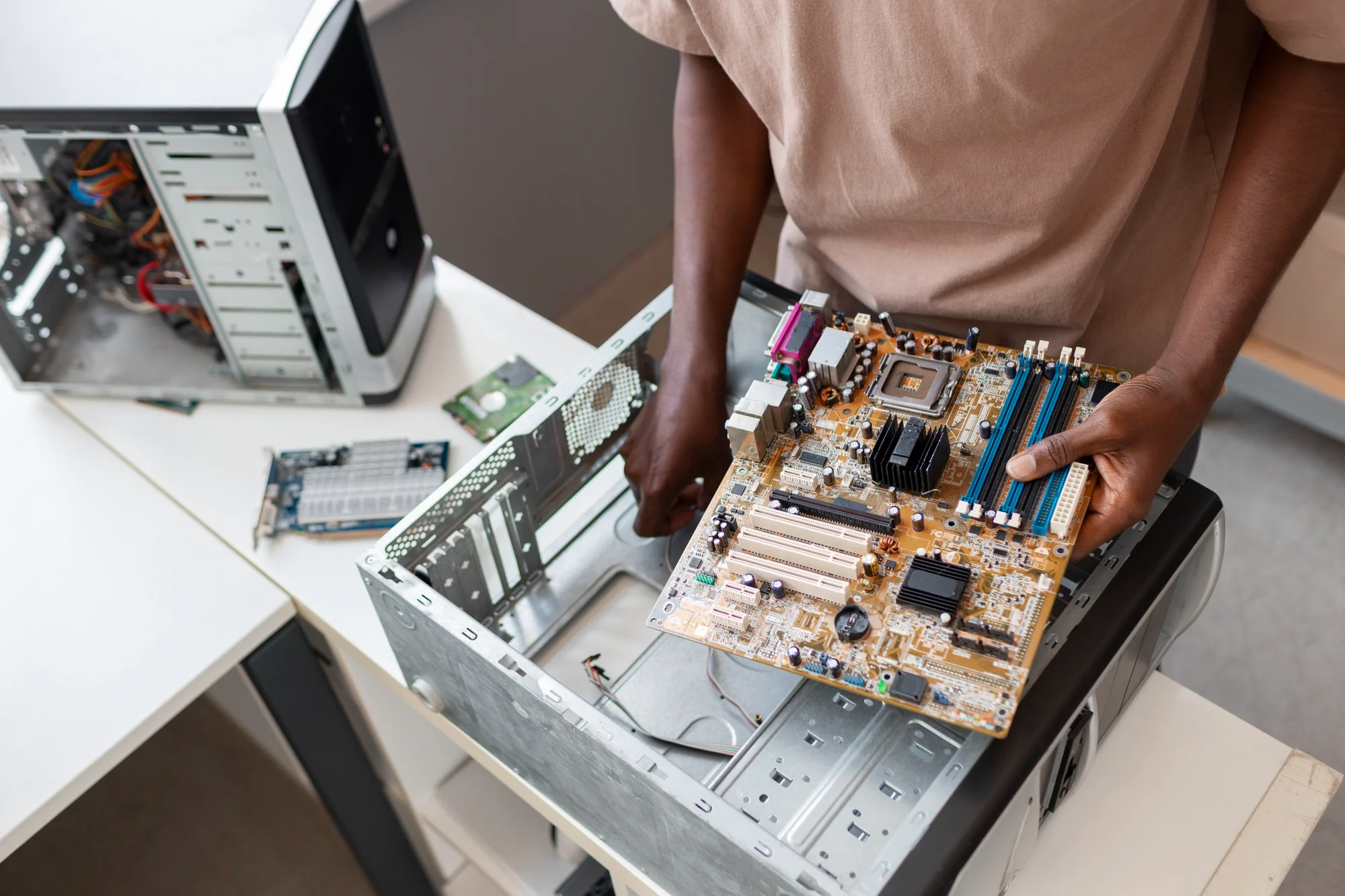
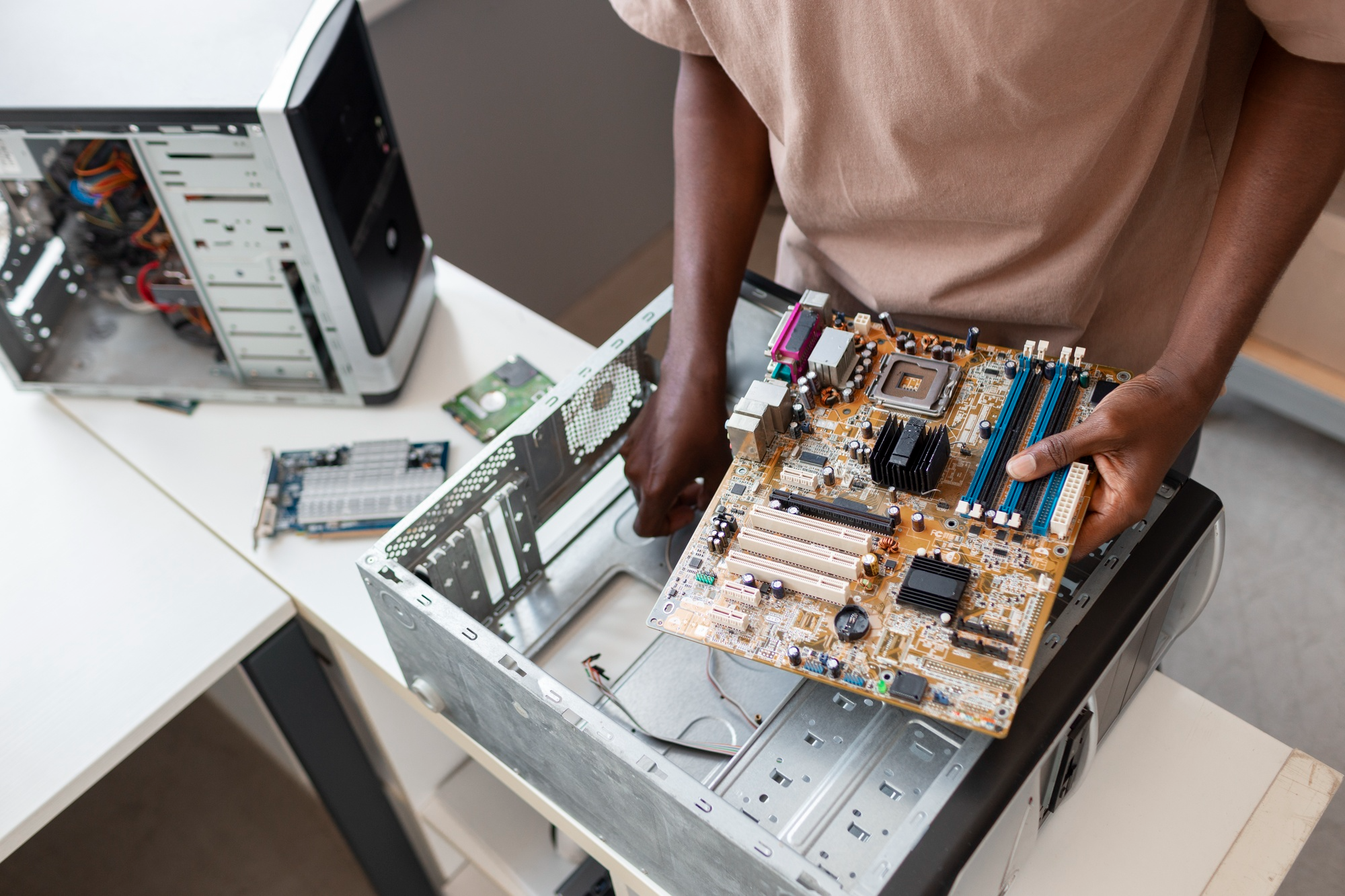
After evaluation, unusable equipment moves through the recycling stage. This process involves dismantling devices, separating materials, and recovering usable components.
IT hardware recycling may involve:
- Removing valuable internal components
- Separating metals, plastics, and other materials
- Processing recyclable electronic parts
- Managing non-recoverable waste responsibly
Electronic devices contain different materials that require specialized handling. Recycling facilities use sorting, dismantling, and recovery processes to separate materials while reducing environmental impact.
Proper electronic waste disposal ensures that equipment does not enter unsuitable waste streams and that recoverable materials are processed responsibly.
Documentation, Reporting, and Compliance Records
Documentation is an essential part of business electronics recycling. Organizations need clear records showing how their equipment was processed after leaving their facility.
A professional recycling partner may provide documentation such as:
- Asset processing reports
- Data destruction records
- Recycling certificates
- Recovery information
- Compliance documentation
Maintaining these records helps businesses demonstrate responsible disposal practices and supports internal reporting requirements.
What Happens to Recovered IT Equipment?
Once equipment has been processed, it follows different paths depending on its condition and recovery potential.
Reuse and Remarketing Opportunities
Some IT equipment may still have useful life after evaluation. Devices that meet performance and security requirements can be refurbished, reused, or prepared for remarketing.
Reuse provides several benefits:
- Extends equipment lifecycle
- Reduces electronic waste generation
- Recovers additional asset value
- Supports sustainable technology management
Businesses can work with recycling providers that evaluate equipment before deciding whether recycling or reuse is the most appropriate option.
Responsible Recycling of Non Recoverable Assets
Equipment that cannot be reused moves through responsible recycling processes. These assets are dismantled and processed to recover materials while ensuring remaining components are handled properly.
Non recoverable assets may include damaged devices, outdated hardware, or equipment that no longer meets operational requirements. Professional recycling facilities follow controlled procedures to manage these materials safely.
Environmental Benefits of Proper Electronics Recycling
Proper electronics recycling reduces the amount of technology waste sent to landfills and supports the recovery of valuable resources. Responsible processing allows materials such as metals, plastics, and electronic components to be reused in future manufacturing processes.
A structured recycling approach supports environmental sustainability by:
| Environmental Benefit | Impact |
|---|---|
| Material recovery | Reduces demand for new raw materials |
| Proper disposal | Limits harmful waste handling |
| Equipment reuse | Extends product lifecycle |
| Resource conservation | Supports circular economy practices |
Choosing the Right Electronics Recycling Partner
Selecting the right recycling provider is an important decision for businesses managing retired IT equipment. A qualified partner should prioritize security, compliance, transparency, and environmental responsibility. Choosing a trusted electronic recycle center near me helps businesses ensure that outdated technology is processed securely while following responsible recycling practices.
What Businesses Should Expect From a Certified Provider
Businesses should look for providers that offer:
- Secure collection procedures
- Documented data destruction
- Asset tracking capabilities
- Transparent reporting
- Responsible recycling practices
A reliable provider should be able to explain how equipment moves from collection through final processing.
How E-XPIRE Delivers Secure, Compliant, and Environmentally Responsible Electronics Recycling
Choosing an experienced recycling partner helps businesses simplify IT equipment disposal while maintaining security and compliance. E-XPIRE supports businesses through secure electronics recycling processes designed to protect sensitive information and responsibly manage retired technology assets.
From equipment collection and data destruction to recycling documentation and material recovery, a structured approach ensures that businesses maintain control over their IT assets throughout the recycling lifecycle.
Organizations searching for an electronic recycle center near me should consider providers that offer secure handling, transparent reporting, and environmentally responsible recycling solutions.
Final Thoughts
The electronics recycling process for business IT equipment involves multiple stages designed to protect data, recover valuable resources, and support responsible disposal. From inventory verification and secure data destruction to recycling and compliance reporting, every step plays an important role in managing retired technology.
Businesses should partner with experienced recycling providers that understand the importance of security, documentation, and sustainability. A structured electronics recycling process helps organizations reduce risks while making responsible decisions about their outdated IT equipment.
To learn more about secure IT asset recycling solutions, contact us today.
FAQs
1. What happens during the electronics recycling process?
The electronics recycling process includes equipment collection, inventory verification, data destruction, evaluation, recycling, material recovery, and documentation.
2. Why is secure data destruction important during electronics recycling?
Secure data destruction prevents unauthorized access to confidential business information stored on retired IT equipment and helps organizations maintain compliance.
3. Can business IT equipment be reused instead of recycled?
Yes. Equipment that remains functional may be refurbished, reused, or remarketed after proper evaluation and data sanitization.
4. What documentation should businesses receive after electronics recycling?
Businesses should receive documentation such as recycling reports, asset processing details, and data destruction records depending on the services provided.
5. How should businesses choose an electronics recycling partner?
Businesses should select a provider that offers secure processing, transparent reporting, proper data destruction procedures, and environmentally responsible recycling methods.

A Business Guide to Secure Electronics Recycling in Las Vegas
Electronic waste is growing rapidly as businesses replace computers, servers, networking devices, and other technology to support modern operations. Without a secure disposal strategy, retired equipment can expose organizations to data breaches, compliance issues, and unnecessary environmental impact. Working with professional electronics recycling las vegas services helps businesses dispose of outdated technology safely while protecting confidential information and supporting sustainability goals.
Why Secure Electronics Recycling Matters for Businesses
The Risks of Improper Electronic Waste Disposal
Improper disposal of electronic equipment creates more than environmental concerns. Hard drives, solid state drives, laptops, servers, and storage devices often contain confidential business information, customer records, financial documents, and proprietary data. If this information is not destroyed correctly, unauthorized parties may gain access to sensitive files.
Businesses also risk regulatory penalties if electronic waste is discarded without following approved disposal procedures. In addition, sending reusable equipment directly to landfills wastes valuable resources that could otherwise be recovered or recycled responsibly.
How Secure Recycling Protects Sensitive Business Information
Secure electronics recycling combines certified data destruction with environmentally responsible recycling methods. Every device is tracked, processed, and documented throughout the disposal process. This reduces the risk of data exposure while ensuring organizations maintain complete visibility over retired IT assets.
Businesses that implement secure recycling practices strengthen their cybersecurity strategy and reduce operational risks associated with outdated equipment.
What Is Secure Electronics Recycling?
Secure electronics recycling is a structured process that ensures electronic devices are collected, transported, sanitized, refurbished when appropriate, and recycled according to environmental and security standards.
Understanding the Certified Electronics Recycling Process
The process begins with identifying assets scheduled for retirement. Devices are inventoried before collection, allowing every item to be tracked throughout the recycling project.
Equipment containing storage media undergoes certified data destruction before refurbishment or material recovery begins. Components that still retain value may be recovered, while non reusable materials are processed using environmentally responsible recycling methods.
How IT Equipment Recycling Supports Data Security and Sustainability
Professional recycling providers help organizations balance environmental responsibility with strong information security practices.
Around this stage of the process, businesses often partner with E-XPIRE because it provides secure electronics recycling, asset tracking, certified data destruction, and responsible IT asset management solutions that support both compliance and sustainability initiatives.
Why Las Vegas Organizations Need Professional Electronics Recycling
Managing Electronic Waste Across Growing Businesses
As businesses expand, the number of retired computers, networking equipment, mobile devices, and servers increases significantly. Without a structured recycling strategy, storage rooms can quickly fill with unused technology that still contains valuable data.
Professional electronics recycling services simplify this process by collecting equipment directly from business locations and managing every stage of the disposal lifecycle.
Supporting Environmental Compliance and Corporate Sustainability Goals
Organizations are increasingly expected to demonstrate responsible environmental practices. Secure recycling helps reduce landfill waste while supporting internal sustainability programs and ESG objectives.
Recycling also recovers valuable materials that can be reused in future manufacturing processes, reducing the demand for newly mined resources.
What IT Equipment Can Be Recycled?
Servers, Computers, Networking Equipment, and Mobile Devices
Most enterprise technology can be processed through secure recycling programs, including:
- Desktop computers
- Laptops
- Enterprise servers
- Storage arrays
- Networking switches
- Firewalls
- Routers
- Mobile devices
- Power supplies
- Backup hardware
- Peripheral equipment
Proper evaluation determines whether equipment should be refurbished, reused, remarketed, or recycled.
Identifying Assets for Reuse, Recovery, or Responsible Recycling
Not every retired device needs immediate recycling. Some assets may still have operational value and can be redeployed internally or refurbished for secondary use. Equipment that no longer meets business requirements but remains functional may also qualify for remarketing.
Devices that are obsolete or beyond repair should enter certified recycling programs where materials can be safely recovered.
The Secure Electronics Recycling Process
Asset Collection, Inventory, and Secure Transportation
Professional providers begin with a detailed inventory of all equipment scheduled for disposal. Each asset receives proper identification to maintain complete traceability throughout the project.
Equipment is packaged carefully before transportation using documented chain of custody procedures. Secure transportation minimizes risks while moving sensitive hardware between business locations and recycling facilities.
Certified Data Destruction, IT Hardware Recycling, and Material Recovery
Before any equipment is dismantled, certified data destruction ensures confidential information cannot be recovered.
Once data sanitization is complete, hardware is inspected to determine whether components can be refurbished or reused. Remaining materials are separated for responsible recycling to maximize resource recovery while reducing landfill waste.
Organizations searching for a trusted electronic waste company should look for providers that combine secure data destruction, certified recycling, and complete asset tracking throughout every stage of the process.
Best Practices for Commercial E-Waste Disposal
Creating an IT Asset Disposal Policy
Every business should establish a formal IT asset disposal policy covering equipment retirement, inventory management, secure transportation, data destruction, and recycling procedures.
Standardized policies reduce confusion while ensuring every department follows the same security requirements.
Maintaining Asset Tracking and Chain of Custody
Accurate documentation should accompany every retired asset from collection through final recycling.
Important records include:
- Asset inventories
- Serial numbers
- Collection dates
- Transportation records
- Data destruction certificates
- Recycling documentation
These records support compliance audits while providing complete visibility throughout the disposal process.
Common Electronics Recycling Mistakes Businesses Should Avoid
Disposing of IT Equipment Without Certified Data Destruction
Deleting files or formatting storage devices does not permanently remove sensitive information. Certified data destruction should always occur before equipment leaves organizational control.
Choosing Recycling Providers Without Verified Certifications
Not every recycling company follows recognized security or environmental standards. Businesses should verify certifications, documented procedures, and industry experience before selecting a provider.
Choosing an experienced recycling partner reduces operational risk while improving compliance outcomes.
How to Choose the Right Electronics Recycling Company in Las Vegas
Certifications, Security Standards, and Industry Experience
A reliable provider should demonstrate experience handling enterprise technology while maintaining strict security procedures.
Important considerations include certified data destruction, secure transportation, documented chain of custody, environmental compliance, and transparent reporting.
Questions to Ask Before Selecting a Secure Electronics Recycling Provider
Before selecting a provider, businesses should ask:
- How is sensitive data destroyed?
- What documentation is provided after recycling?
- How is equipment tracked during transportation?
- What environmental certifications does the company maintain?
- Which devices can be refurbished instead of recycled?
- How are recovered materials processed?
Clear answers help organizations evaluate service quality and long term reliability.
Why Businesses Choose E-XPIRE Las Vegas
Secure Electronics Recycling Las Vegas With Certified Data Destruction
Businesses trust E-XPIRE because it combines certified data destruction, secure transportation, detailed asset tracking, and environmentally responsible recycling within one structured process.
Every stage is documented to support compliance while protecting confidential business information.
Responsible IT Hardware Recycling That Protects Data and Supports Sustainability
E-XPIRE helps organizations reduce electronic waste while recovering value from retired technology whenever possible. Secure recycling practices protect sensitive information, support environmental initiatives, and simplify enterprise IT asset management.
Conclusion
Secure electronics recycling is no longer simply an environmental responsibility. It has become an essential part of protecting business data, maintaining regulatory compliance, and managing technology lifecycles efficiently. By partnering with experienced providers, organizations can safely retire outdated equipment while supporting sustainability goals and reducing operational risks.
If your organization is planning its next technology refresh, Contact E-XPIRE Today to learn how secure electronics recycling services can protect your business while supporting responsible IT asset management.
Frequently Asked Questions
1. What is secure electronics recycling?
Secure electronics recycling is the process of safely collecting, tracking, sanitizing, refurbishing, and recycling electronic equipment while protecting sensitive business data and meeting environmental standards.
2. What types of business equipment can be recycled?
Businesses can recycle servers, desktop computers, laptops, storage devices, networking hardware, mobile devices, power equipment, and many other IT assets.
3. Why is certified data destruction important before recycling?
Certified data destruction permanently removes confidential information from storage devices, preventing unauthorized access and reducing the risk of data breaches.
4. How does electronics recycling support sustainability?
Responsible recycling reduces electronic waste, recovers reusable materials, minimizes landfill disposal, and supports corporate environmental and ESG initiatives.
5. What should businesses look for in an electronics recycling provider?
Organizations should choose providers with certified data destruction processes, secure transportation, chain of custody documentation, environmental compliance, transparent reporting, and proven experience managing enterprise IT assets.

Certified E-Waste Recycling: How Companies Stay Compliant & Secure
For modern enterprises, the lifecycle of IT assets does not end at decommissioning. In fact, for compliance-driven organizations, the moment a server, laptop, or storage array is unplugged, it enters a new and precarious legal category: Electronic waste recycling services.
The stakes are higher than ever. According to the 2024 Global E-waste Monitor, a 2.6 million tonnes annually, on track to reach 82 million tonnes by 2030, yet only 22.3% is documented as formally collected and recycled. The remaining 77% often ends up in landfills or informal export streams, creating massive environmental and legal liabilities for the companies that originally owned the equipment.
For decision-makers and CISOs, "compliance" is not just about checking a box; it is about survival. Improper disposal can trigger federal Superfund (CERCLA) liability, hefty regulatory fines, and irreparable brand damage.
E-XPIRE helps businesses navigate this complex landscape. As a leader in certified e-waste management, we provide the verifiable, end-to-end solutions necessary to turn a potential liability into a secure, sustainable advantage.
The Legal Minefield: Why "Throwing It Away" Is Not an Option
Many businesses mistakenly believe that once equipment is handed over to a hauler, their responsibility ends. Under U.S. federal law, specifically the Comprehensive Environmental Response, Compensation, and Liability Act (CERCLA), this is false.
CERCLA imposes "cradle-to-grave" liability. This means if your company's old monitors or circuit boards are found in an illegal dump site or a contaminating landfill ten years from now, you can be held financially responsible for the cleanup costs—even if you paid a vendor to take them away.
This is where certified electronics recycling becomes your primary insurance policy.
A non-certified vendor might strip the copper and dump the toxic remains. A partner like E-XPIRE, however, adheres to strict environmental standards. We ensure that hazardous components (like mercury in screens or lead in solder) are processed in full compliance with EPA and state regulations, severing the chain of liability that could otherwise lead back to your doorstep.
What "Certified" Actually Means for Your Business?

In the unregulated "wild west" of scrap metal, certification is the sheriff. It distinguishes professional e waste management from amateur scrapping.
When you partner with certified electronics recycling firm like E-XPIRE, you are securing a process that guarantees:
- Downstream Accountability: We track where every component goes. From plastics to precious metals, we ensure all downstream partners are also vetted and compliant.
- No Illegal Export: A common "dirty secret" of cheap recyclers is exporting toxic waste to developing nations. E-XPIRE strictly adheres to international conventions (such as the Basel Convention amendments) to ensure waste is treated domestically or responsibly.
- Audit-Ready Documentation: You receive more than an invoice. We provide detailed reporting that validates the compliant disposal of your assets, essential for ESG reporting and regulatory audits.
Regulatory Note: As of 2025, tighter international restrictions on the movement of e-waste mean that exporting non-working electronics is harder and riskier than ever. Domestic, certified processing is now the only safe path for US enterprises.
The Intersection of Security and Sustainability
For regulated industries like healthcare, finance, and government, environmental compliance cannot come at the cost of data security. The two must work in tandem.
E-XPIRE integrates secure data destruction directly into the recycling workflow. Before any material is broken down for commodity recovery, all data-bearing devices are sanitized or physically shredded. This ensures that while you are saving the planet, you aren't exposing your patients or clients.
Statistics: The Cost of Negligence
- Environmental Impact: The EPA estimates that recycling one million laptops saves the energy equivalent to the electricity used by more than 3,500 US homes a year.
- Financial Risk: Under RCRA (Resource Conservation and Recovery Act) regulations, civil penalties for non-compliant hazardous waste disposal can exceed $100,000 per day per violation.
Certified vs. Non-Certified: A Risk Comparison
To help your procurement team understand the value of certified ewaste disposal, we have compared the operational differences below.
| Feature | Certified Recycler (E-XPIRE) | Non-Certified Scrapper |
| Liability Protection | Full Indemnification against environmental claims. | Zero Protection; you remain liable under CERCLA. |
| Data Security | Integrated, NIST-compliant data destruction. | Often ignored; drives may be resold intact. |
| Documentation | Detailed Certificates of Recycling & Destruction. | Basic receipt or weigh ticket only. |
| Environmental Process | Toxic materials (mercury, lead) safely isolated. | Toxic materials are often crushed into landfills. |
| Export Policy | No illegal export of hazardous e-waste. | High risk of illegal exports to developing nations. |
ESG: Turning Compliance into Corporate Value
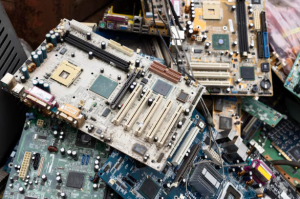
Modern investors and consumers scrutinize a company's Environmental, Social, and Governance (ESG) performance. Certified electronics recycling is one of the easiest, most measurable ways to boost your ESG score.
By partnering with E-XPIRE, you can report exact metrics:
- Pounds of waste diverted from landfills.
- Carbon emissions avoided through material recovery.
- Quantifiable contribution to the circular economy.
Instead of your old IT assets becoming a compliance headache, they become a success story in your annual sustainability report.
Turning E-Waste Risk into a Compliant, Sustainable Advantage
In an era of aggressive regulatory enforcement and rising environmental consciousness, the "cheapest" disposal option is often the most expensive mistake a company can make. The legal fees from a single CERCLA violation or the reputational cost of a data breach far outweigh the investment in professional ITAD services.
E-XPIRE offers the certainty that compliance-driven enterprises need. We protect your data, your legal standing, and the environment, simultaneously.
Is your e-waste strategy a liability or an asset?
Ensure your organization is fully compliant and secure. Contact E-XPIRE today to schedule a certified pickup and take the risk out of recycling.
Frequently Asked Questions
- What makes "certified" electronics recycling different from standard recycling?
Certified recycling involves rigorous third-party audits (like R2 or e-Stewards standards) that verify environmental health and safety practices, data security protocols, and downstream accountability. It ensures your e-waste is not illegally exported or dumped in landfills. - Can my company be fined for using an uncertified recycler?
Yes. Under CERCLA (Superfund) laws, you retain "cradle-to-grave" liability for your hazardous waste. If your uncertified vendor dumps your equipment illegally, federal authorities can hold your company financially responsible for the environmental cleanup costs. - What types of electronics does E-XPIRE accept?
We accept a broad range of IT assets, including servers, laptops, desktops, mobile devices, networking equipment, storage media, and peripherals. We also handle specialized equipment; please contact us for specific inquiries. - How does E-XPIRE handle data stored on devices destined for recycling?
Data security is our priority. All data-bearing devices undergo NIST-compliant data erasure or physical shredding before the recycling process begins. We ensure that no data leaves our facility intact, providing peace of mind alongside environmental compliance. - Do you provide documentation for ESG reporting?
Yes. E-XPIRE provides comprehensive reporting, including Certificates of Recycling and Weight Metrics. These documents serve as audit-proof evidence of your diversion rates and sustainability efforts, perfect for inclusion in your annual ESG or CSR reports. - Does E-XPIRE service enterprise-level cleanouts?
Absolutely. We specialize in enterprise-scale IT asset disposition. Our logistics team can manage the secure collection, palletization, and transport of thousands of assets from multiple locations, ensuring a seamless and compliant process for large organizations.
