



Hard Disk Disposal Service: How Las Vegas Businesses Can Retire Storage Devices Securely
The Las Vegas metropolitan economy has evolved far beyond hospitality, tourism, and gaming. Modern Southern Nevada serves as an expanding technological and commercial center, supporting regional financial institutions, healthcare networks, defense contractors, and enterprise data center hubs across Clark County. As local organizations upgrade storage area networks (SANs), decommission enterprise server racks, and refresh corporate laptop fleets, technical leaders face an urgent challenge. What happens to the hard drives and solid-state drives holding sensitive business data?
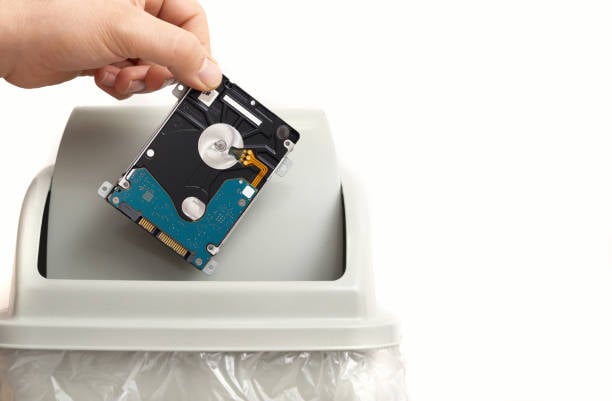
Discarding legacy storage media in commercial dumpsters or handing drives to unverified scrap collectors introduces severe security vulnerabilities. Formatting drives or running basic operating system resets leaves magnetic and solid-state data layers intact and readable using forensic recovery software. Securing end-of-life hardware demands an accredited, commercial hard disk disposal service that permanently renders proprietary records unrecoverable while providing verifiable legal compliance documentation.
At E-XPIRE, we provide commercial organizations with dependable, certified IT asset disposition and secure data destruction. Headquartered right here in Las Vegas, our team pairs certified media destruction workflows with secure chain of custody logistics to ensure your digital records, trade secrets, and customer data remain protected from liability. This guide examines how Las Vegas businesses can retire storage hardware securely, meet strict federal and state regulatory mandates, and achieve complete destruction verification.
The Hidden Vulnerabilities of Inadequate Media Disposal
When storage hardware leaves active deployment, its risk profile shifts from operational performance to data liability. Hard disk drives (HDDs), solid-state drives (SSDs), backup magnetic tapes, and hybrid flash storage retain data long after systems are unplugged.
Forensic Recovery Threats and Legacy Residual Data
Basic operating system deletion or standard disk partitioning does not eradicate underlying data blocks. These commands simply remove file directory pointers while leaving the actual binary data intact across drive platters and flash memory cells. Cybercriminals and rogue actors routinely purchase surplus corporate drives from auction sites and unvetted recyclers, using low-cost forensic software to rebuild active directories, customer credit profiles, payroll files, and source code.
Federal enforcement agencies consistently warn about the severe risks associated with improper media retirement. According to data documented by the Federal Trade Commission (FTC), data compromises continue to impact tens of millions of consumer records annually, with regulatory bodies taking aggressive enforcement action against businesses that fail to maintain reasonable physical disposal safeguards for sensitive consumer records. Implementing certified secure hard disk disposal prevents these regulatory actions and eliminates exposure risks.
The Regulatory Realities for Nevada Businesses
Las Vegas enterprises operate under strict state, federal, and international privacy mandates:
- Healthcare Providers: Must comply with the Health Insurance Portability and Accountability Act (HIPAA), requiring documented destruction of electronic protected health information (ePHI).
- Financial and Gaming Institutions: Regulated under the Gramm-Leach-Bliley Act (GLBA), Sarbanes-Oxley (SOX), and Nevada Gaming Control Board standards that demand strict verification for financial data retirement.
- Nevada Consumer Privacy Statutes: Nevada state law enforces strict rules on business entities concerning personal identifiable information (PII) disposal, requiring organizations to take reasonable steps to prevent unauthorized access during hardware destruction.
Comparing Sanitization Methods: Logical Erasure vs. Hard Disk Shredding
Commercial media destruction relies on two primary methodologies: software-based logical sanitization and physical destruction. Evaluating these approaches allows IT directors to select the appropriate strategy for their compliance risk profile.
| Method | Technical Process | Regulatory Compliance | Best Application |
| NIST 800-88 Logical Clear | Overwrites all logical drive blocks with verified pseudo-random patterns | Meets standard commercial standards; preserves drive hardware for resale | Functional, modern enterprise drives intended for secondary market remarketing |
| Cryptographic Erase | Destroys internal encryption keys on self-encrypting drives (SEDs) | High compliance speed; requires verified key eradication | Modern encrypted flash storage and enterprise SSDs with intact controllers |
| Degaussing | Subjects magnetic media to high-intensity magnetic fields, disrupting domains | Excellent for magnetic platters; completely neutralizes drive operation | Defective mechanical HDDs, legacy backup tapes, and magnetic media |
| Physical Mechanical Shredding | High-torque industrial shredder fractures platters and chips into pieces | Gold standard for high-security, defense, healthcare, and gaming sectors | Failed drives, end-of-life media, SSDs, and zero-resale enterprise hardware |
On-Site vs. Off-Site Storage Media Destruction
When planning a media destruction project, Las Vegas organizations must decide between mobile on-site destruction and off-site plant processing. Both options provide secure, auditable outcomes, but they cater to different operational priorities.
On-Site Mobile Hard Disk Shredding Service
For defense contractors, banking institutions, and healthcare providers whose corporate security policies forbid active data-bearing devices from leaving company premises, an on-site hard disk shredding service provides immediate relief. A specialized mobile shredding truck parks directly at your loading dock or corporate parking bay. Your IT personnel physically witness the serialized scanning and immediate mechanical destruction of every drive before the mobile unit departs.
Off-Site Plant-Based Destruction
Off-site destruction provides an efficient, cost-effective alternative for bulk decommissioning projects involving thousands of drives. Technicians lock serialized drives into secure, tamper-evident rolling bins at your location. The assets travel via dedicated, GPS-tracked vehicles to a specialized disposition plant, where automated shredders process media within access-controlled, video-monitored facilities.
Adapting Media Retirement to High-Risk Industries
Different economic sectors in Southern Nevada face distinct compliance pressures. A reliable disposition partner adapts its industry-specific destruction solutions to match the unique governance requirements of your organization:
- Hospitality and Casino Gaming: Resorts and gaming venues handle millions of guest payment transactions, player loyalty databases, and regulatory reporting files. They require verified, documented shredding that satisfies Nevada Gaming Control Board compliance audits.
- Healthcare Systems and Life Sciences: Southern Nevada hospitals, surgical centers, and private practices require strict HIPAA compliance, mandating serialized certificates that document the permanent destruction of diagnostic images, medical charts, and billing records.
- Financial Services and Legal Firms: Wealth management groups, credit unions, and corporate legal departments require unbroken chain of custody records to satisfy FINRA, SEC, and GLBA requirements.
- Data Centers and Technology Providers: Cloud providers and colocation centers in the Las Vegas valley decommissioning multi-petabyte storage arrays require rapid, high-throughput drive shredding that maintains operational continuity.
The Environmental Imperative: Responsible Downstream Recycling
Retiring storage media responsibly involves both digital security and environmental compliance. Electronic waste represents an urgent environmental challenge nationwide.
Research published by the United States Environmental Protection Agency (EPA) shows that electronic waste remains one of the fastest-growing municipal solid waste streams in the United States, containing valuable non-renewable resources like aluminum, copper, and rare-earth magnets alongside toxic heavy metals.
Once high-torque industrial blades fracture hard drives into scrap fragments, the process is not complete. A certified partner routes shredded residue to accredited downstream material recovery facilities. Aluminum platters, circuit boards, and steel casings are separated and melted down into raw manufacturing commodities. This circular process guarantees that zero hazardous materials reach Nevada landfills.
The E-XPIRE Advantage: Certified Data Destruction in Las Vegas
Selecting the right partner for end-of-life hardware requires an organization that prioritizes verification, security, and environmental excellence. At E-XPIRE, our corporate headquarters in Las Vegas gives local enterprises direct access to industry-leading ITAD expertise.
Our comprehensive suite of IT disposition services delivers complete compliance peace of mind:
- Certified NIST 800-88 Compliance: We execute media sanitization and physical destruction adhering strictly to NIST Special Publication 800-88 Revision 1 guidelines, issuing formal, audit-ready Certificates of Data Destruction.
- Serialized Chain of Custody: Every drive receives an individual intake barcode scan, ensuring end-to-end tracking from your server rack to the shredder blade.
- Flexible On-Site and Off-Site Destruction: We deploy mobile shredding vehicles directly to your facility for witnessed destruction or provide secure, GPS-tracked transport to our local processing center.
- Zero-Landfill Commitment: All shredded metallic remnants and electronic circuit scrap re-enter clean manufacturing supply chains through certified circular recycling partnerships.
Whether your organization operates in downtown Las Vegas, Summerlin, Henderson, North Las Vegas, or surrounding service areas, our local presence guarantees rapid response times, experienced technicians, and unmatched accountability.
Critical Vendor Evaluation Checklist for Las Vegas IT Managers
Before contracting a third-party vendor to destroy enterprise storage devices, evaluate their capabilities against this practical vendor checklist:
| Evaluation Factor | Critical Vendor Question | Required Industry Standard |
| Destruction Standards | Do your processes adhere to NIST SP 800-88 Rev. 1 guidelines? | Verified sanitization and mechanical particle reduction |
| Audit Documentation | Do you provide a serialized Certificate of Data Destruction? | Itemized document detailing individual drive serial numbers |
| Chain of Custody | Are transport bins locked and vehicles tracked via active GPS? | Tamper-evident seals and continuous satellite telematics |
| On-Site Capabilities | Can your team provide mobile, witnessed shredding at our dock? | Self-contained mobile shredding units with viewing monitors |
| Environmental Policy | Do you guarantee zero-landfill disposal for all shredded scrap? | Full compliance with R2-aligned circular recovery channels |
Secure Your Enterprise Storage Media Today
Decommissioned hard drives, magnetic tapes, and enterprise solid-state drives should never gather dust in unmonitored IT storage closets or enter general waste disposal streams. Choosing an accredited, commercial hard disk disposal service protects your brand reputation, eliminates regulatory non-compliance fines, and ensures that sensitive data is permanently destroyed.
Protect your enterprise with verified, local media destruction. Contact E-XPIRE today to speak with our data protection specialists, schedule an on-site mobile shredding truck, and secure your upcoming storage retirement project.
Frequently Asked Questions
1. What is the difference between degaussing and hard disk shredding?
Degaussing exposes magnetic hard drives to a powerful electromagnetic field, neutralizing the magnetic charge on the platters and destroying stored data along with internal drive firmware. Hard disk shredding uses high-torque mechanical blades to physically tear drives into small fragments. For non-magnetic solid-state drives (SSDs), mechanical shredding is the required physical destruction method because SSDs do not rely on magnetic storage.
2. Can our organization receive a certified disposal document for compliance audits?
Yes. A reputable provider delivers a serialized Certificate of Data Destruction upon project completion. This formal legal document lists the exact date, time, methodology, and serial number of every individual hard drive and solid-state drive processed, satisfying internal compliance officers, third-party auditors, and legal counsel.
3. Why is basic disk formatting insufficient for enterprise data security?
Standard operating system formatting or file deletion only removes the pointers that direct the system to file locations; the underlying data remains fully intact on drive sectors and flash cells. Anyone utilizing free or low-cost forensic software can reconstruct formatted drives and access confidential corporate records.
4. How small are hard drives shredded during physical destruction?
Commercial electronic shredders utilize industrial carbon-steel blades that cut hard drives down to small fragments. For high-security environments, rotational cross-cut shredders reduce drives to particles smaller than one-half inch to three-eighths of an inch, preventing any physical or forensic data reconstruction.
5. Can our IT team witness the destruction of our hard drives on site?
Yes. Professional ITAD providers operate mobile shredding units that park at your facility or data center loading dock. Your internal security personnel can inspect drives, witness them being placed into the shredder hopper, observe the physical destruction on closed-circuit monitors, and verify the resulting shredded material before the vehicle leaves.
